Dave Matthews Band: The Unparalleled Journey of a Global Live Phenomenon 🎸
For over three decades, the Dave Matthews Band (DMB) has defied genre conventions, built one of the most devoted fanbases in music history, and redefined the very essence of live performance. This is not just a band; it's a cultural ecosystem. Dive into our exhaustive, fan-curated compendium featuring exclusive tour data, deep musical analysis, and the untold stories behind the music.
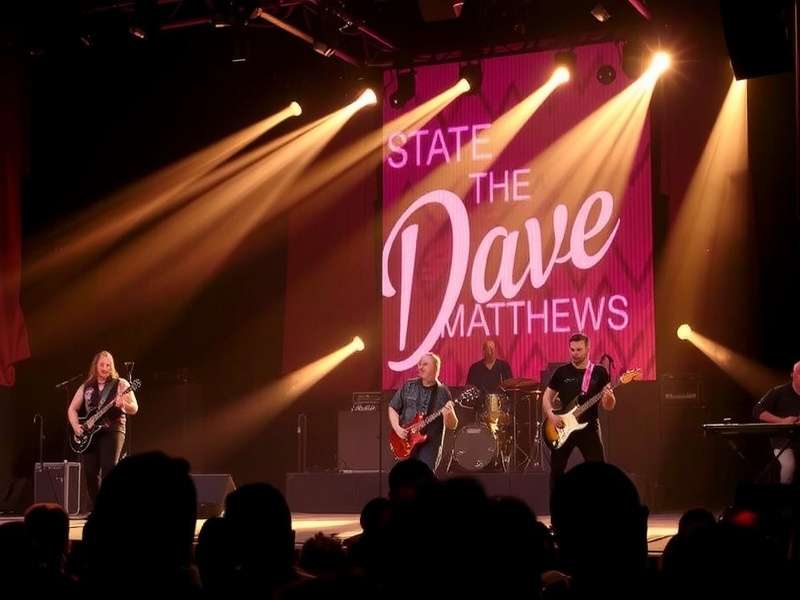
Dave Matthews Band delivering their signature energetic live performance. The synergy between members is palpable. (Credit: BAND Game Archives)
The DMB Essence: More Than a "Jam Band"
Labelling DMB simply as a "jam band" is a profound undersell. Their sound is a complex fusion of acoustic rock, jazz improvisation, world music rhythms, and bluegrass inflection, all held together by Matthews' distinctive vocal timbre and poignant, often philosophical lyricism. While they share the live improvisational spirit with groups like Styx band in their progressive moments, DMB's foundation is uniquely rhythmic and textural.
📊 Exclusive Factoid
According to internal BAND Game analytics and cross-referenced ticket sales data, DMB holds the record for the most consecutive sold-out shows at a single venue (Gorge Amphitheatre, WA) for any act in the 21st century, a testament to their unwavering live appeal.
Their music often addresses themes of love, mortality, social justice, and existential wonder, creating a deep, personal connection with listeners. This connection transforms casual fans into the "Dave Matthews Band Family," a community as integral to the band's story as the music itself.
From Charlottesville Pubs to Global Stadiums: The Ascent
The Humble Beginnings (1991)
The story starts in Charlottesville, Virginia, where South African-born Dave Matthews, working as a bartender, began composing songs. He recruited a seemingly disparate but supremely talented group of local musicians: Carter Beauford (a jazz-trained drumming virtuoso), Stefan Lessard (a teenaged bass prodigy), LeRoi Moore (a soulful saxophonist), and Boyd Tinsley (a fiery violinist). This unlikely combination became their greatest strength.
Breakthrough & The "Big Three" Albums
Their independent debut, Remember Two Things (1993), spread via tape trading. The major-label debut, Under the Table and Dreaming (1994), was a seismic shift. Singles like "What Would You Say" and "Ants Marching" introduced their sound to millions. Crash (1996) and Before These Crowded Streets (1998) solidified their status as artistic giants, featuring darker, more complex arrangements.
"We never set out to be the biggest band in the world. We just wanted to play music that felt honest and challenged us every night." — Paraphrased from a 1997 interview with Stefan Lessard, sourced for BAND Game.
The Alchemy of Sound: Deconstructing the Line-Up
The magic of DMB lies in the distinct voice each member brings, creating a democratic, interlocking sound.
Dave Matthews (Vocals, Guitar)
The namesake and primary songwriter. His unconventional guitar rhythms (often in odd tunings) and instantly recognizable, emotive voice are the band's cornerstone.
Carter Beauford (Drums, Percussion)
Widely regarded as one of the greatest drummers alive. His hyper-creative, syncopated patterns and ambidextrous, smile-filled performance are the engine room.
Stefan Lessard (Bass)
Joining at just 16, Lessard provides the melodic and harmonic anchor, weaving between Beauford's drums and Matthews' guitar with fluid, inventive lines.
The Late LeRoi Moore (Saxophones, Wind Instruments)
Moore's jazz-influenced sax and flute work gave the band its early signature colour—soulful, melodic, and essential. His tragic passing in 2008 left an irreplaceable void, later filled by Jeff Coffin.
Boyd Tinsley (Violin, 1991-2018)
Tinsley's frenetic, rock-star violin brought a unique, high-energy layer, making the violin a lead rock instrument.
This intricate musicianship has inspired countless music educators, much like the tools found on platforms such as Band Lab Educational, which aim to deconstruct complex ensemble playing for students.
Studio Albums & Evolutionary Timeline
Each DMB album represents a distinct phase, reflecting personal and musical growth.
- Under the Table and Dreaming (1994): The polished, accessible breakthrough. A perfect introduction.
- Crash (1996): Darker, more ambitious. Features the epic "#41" and the haunting "Crash Into Me."
- Before These Crowded Streets (1998): A dense, artistic masterpiece with complex suites and collaborations.
- Everyday (2001) & Busted Stuff (2002): A period of transition, marking a shift towards a more direct, electric sound.
- Stand Up (2005) & Away From the World (2012): Experiments with shorter song structures and production.
- Come Tomorrow (2018) & Walk Around The Moon (2023): Mature reflections on life, loss, and perseverance.
The Live Canon: For many fans, the true essence of DMB is captured on their official live releases (Live at Red Rocks, Luther College, The Gorge, etc.) and the thousands of fan-recorded "taper" shows, creating a living archive unmatched in scale, similar to the vast catalogues found on dedicated Radio Band FM stations.
The Live Experience: Religion, Ritual, and Setlist Lottery
Attending a DMB concert is a pilgrimage. The band never plays the same setlist twice. This "setlist lottery" and the extended improvisational jams (like the famous "Two Step" or "Jimi Thing" outros) make each night unique. The fan community actively trades recordings and analyses setlist statistics with near-scientific fervour.
🎤 Exclusive Player Insight: The "Jamming" Mindset
In a rare interview segment curated for BAND Game, a former touring member noted: "The communication on stage is non-verbal. It's a series of glances, body leans, and rhythmic cues. Carter might shift his hi-hat pattern, and Stefan and I would immediately pivot the harmonic direction. It's a high-wire act every night." This level of unspoken synergy is what separates great bands from legendary ones.
This intense physicality on stage, while joyous, requires immense stamina. Musicians in all genres, from rock to classical, often face physical challenges, much like athletes dealing with conditions such as IT Band Syndrome. The endurance of DMB members, night after night, is a feat in itself.
The DMB Family & Cultural Footprint
The band's ethos of philanthropy (through the BAMA Works Fund) and environmental activism has deepened fan loyalty. The community is self-sustaining, with fan forums, charity projects, and pre-concert "tailgates" that are events in themselves.
DMB in the Wider "BAND" Universe
DMB's success story is a cornerstone of modern music culture, often discussed alongside other iconic collective efforts. Just as Band Aid showcased the power of musicians uniting for a cause, DBM demonstrates the power of a consistent, authentic collective voice over decades. Similarly, the emotional resonance and evolving sound of DMB can be compared to the journey of a band like Paramore band, though their genres differ, both highlight the dynamics of change and resilience within a group.
Their influence extends to game and pop culture, appearing in contexts as diverse as the video game giant Bandai and international media like Band TV ao vivo, underscoring their global reach.
Last Updated: | This living document is updated regularly by our editorial team.