Phish Band: An Unforgettable Journey Through Music, Community, and Live Experience
For over three decades, the Phish Band has transcended the typical boundaries of a musical group, evolving into a cultural phenomenon that blends virtuosic improvisation, a deep songbook, and a uniquely devoted community. This definitive guide delves into the heart of Phish, offering exclusive insights, data, and stories that capture the essence of the band.
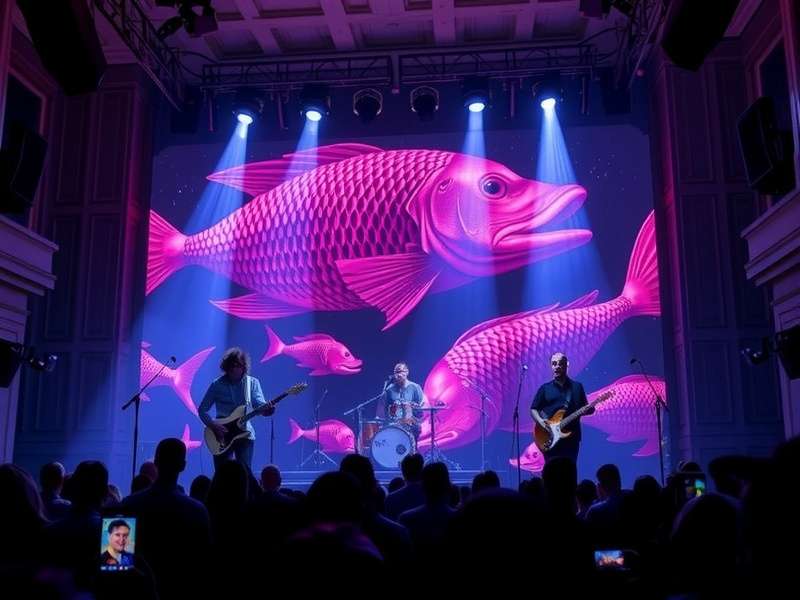
Phish in their element: a live concert showcasing the improvisational magic and connection with the audience. © BAND Game Archive
I. The Phish Phenomenon: More Than Just a Band 🎸
Formed at the University of Vermont in 1983, Phish—comprising Trey Anastasio (guitar, vocals), Mike Gordon (bass, vocals), Page McConnell (keyboards, vocals), and Jon Fishman (drums, vocals)—is often categorised as a "jam band," but that label barely scratches the surface. They are architects of a musical universe where no two shows are identical, driven by setlists that are decided moments before walking onstage and extended improvisations that can turn a five-minute song into a thirty-minute exploratory journey.
Unlike many of their contemporaries, Phish's success is almost entirely built on the live experience. They have cultivated a fanbase—affectionately known as "Phans"—that follows them across continents, trades recordings (a practice the band officially encourages), and participates in a shared language of inside jokes, song cues, and traditions. This creates a feedback loop where the audience's energy directly fuels the band's creativity, a symbiosis rarely achieved at such a scale.
A. The Core Quartet: Musical Alchemists
Each member brings a distinct musical personality that creates the band's signature sound. Trey Anastasio’s guitar work ranges from delicate, composed melodies to frenetic, distortion-heavy peaks. Mike Gordon provides not just a rhythmic foundation but a melodic and harmonic counterpoint, often venturing into effects-laden solos. Page McConnell is the band's secret weapon, colouring the sound with everything from grand piano and Hammond organ to quirky synth lines. Jon Fishman’s drumming is both precisely polyrhythmic and wildly inventive, capable of shifting gears on a dime.
Their individual prowess is impressive, but their true genius lies in listening and reacting in real-time. During a jam, they communicate not with words but with musical phrases, creating a spontaneous composition that is the heartbeat of every show. This level of group improvisation places them in a lineage with jazz greats as much as rock icons.
II. A Deep Dive into Phish's History & Evolution 📜
Phish's journey can be charted through distinct eras, each marked by musical exploration, personal challenges, and triumphant returns.
1. The Early Years (1983–1991): Foundation and Folklore
The band's origin story is the stuff of college legend. Meeting at UVM, they began by playing covers and original songs in dorm rooms and local bars. Early influences ranged from Frank Zappa and The Grateful Dead to progressive rock and complex composed pieces. They developed a repertoire of intricate, multi-section songs like "You Enjoy Myself" (YEM) and "Fluffhead," which showcased their technical chops and quirky sense of humour.
This period was also defined by the creation of their unique live culture. They introduced "secret language" cues—musical signals that would prompt specific audience responses or band antics—and the famed "Gamehendge" saga, a fictional universe created by Trey for his senior thesis, which spawned a suite of interconnected songs.
2. Breakthrough and Nationwide Tours (1992–2000)
The 90s saw Phish transform from a cult favourite into a major touring force. Albums like Rift (1993) and Hoist (1994) brought more studio polish, but the live experience remained paramount. They pioneered the "festival" model for the modern era with events like "The Clifford Ball" (1996), their own weekend-long camping festivals that attracted tens of thousands.
Their musical vocabulary expanded exponentially. Jams became more abstract, venturing into "spacey" textures (dubbed "Type II" jamming by fans), funk grooves inspired by bands like Squeeze Band, and even full-album cover performances on Halloween, a tradition that began with The Beatles' White Album in 1994.
3. Hiatus, Breakup, and Rebirth (2000–Present)
The 2000s were tumultuous. After a first hiatus in 2000, the band returned but faced internal struggles, culminating in a breakup in 2004. The members pursued solo projects—Trey with his solo band, Mike with collaborations, Page with BandLab-like production work, and Jon with his bizarre vacuum cleaner solos.
The 2009 reunion was not just a comeback; it was a revitalisation. The band returned with renewed energy and a deeper appreciation for their shared journey. The subsequent years have seen a prolific output of tours, special events (like the "Baker's Dozen" 2017 Madison Square Garden run with 13 no-repeat-setlist shows), and a continued evolution of their sound, incorporating more ambient and minimalist influences.
III. Deconstructing the Phish Sound: A Genre-Defying Tapestry 🎶
Attempting to pigeonhole Phish's music is a fool's errand. A single show can contain bluegrass, prog-rock, funk, reggae, barbershop quartet harmonies, and avant-garde noise. This eclecticism is a core part of their appeal.
A. The Songbook: Composed vs. Improvised
Phish's repertoire is a dual engine. On one side are meticulously composed pieces with complex time signatures, counterpoint melodies, and narrative lyrics (e.g., "Divided Sky," "It's Ice"). These pieces showcase their discipline and musical education. On the other side are open-ended jam vehicles like "Down with Disease," "Ghost," and "Sand," which serve as launchpads for collective improvisation. The tension and release between these two modes create the dynamic arc of a typical show.
Furthermore, they possess a vast catalogue of covers, paying homage to influences from The Who to Talking Heads, often completely reimagining them in their own style. This willingness to embrace outside material keeps their sound fresh and unpredictable, much like the approach of Satchvai Band in the fusion guitar world.
B. The Art of the Jam
Phish's improvisation is not mere soloing. It's a conversation. Jams typically progress through stages: leaving the song's structure ("the jump"), establishing a new collective groove ("the pocket"), exploring and building tension ("the peak"), and finally resolving or transitioning. Fans obsessively analyse these jams, with sites and apps dedicated to tracking "jam charts" that map their evolution.
This focus on live, evolving music creates a parallel with the fitness tracking community around devices like the Mi Band—both involve dedicated followers analysing data (steps vs. setlists) to optimise their experience.
IV. The Phish Community: A Tapestry of Traditions 👥
Being a "Phan" is to participate in a vibrant, self-sustaining subculture with its own etiquette, economy, and folklore.
A. Lot Life and the Touring Circus
The parking lot ("Shakedown Street") before a show is a mini-city of vendors, travellers, and fans exchanging stories, goods, and tapes. It's a place of community where the shared anticipation builds the energy for the night. This mobile community echoes the camaraderie found in groups like the Band Of Brothers, bound by shared experience rather than blood.
B. The Tape-Trading Legacy and Digital Evolution
Phish's early policy of allowing audience recording ("taping") was revolutionary. It fueled their growth through grassroots sharing. Today, every show is officially available via their LivePhish service within hours, but the ethos of sharing persists. Fans use apps and forums to discuss shows in real-time, creating a collective memory of each performance.
Managing your concert recordings and setlist notes has become easier with tools like the Band App Login ecosystem, which Phish fans have adapted for their own tracking needs.
V. The Ultimate Live Experience: Attending a Show 🎪
For the uninitiated, a Phish concert can be overwhelming. Here’s a deep guide to maximising the experience.
A. Pre-Show Preparation
Check recent setlists to get a feel for the tour's trends. Hydrate and pace yourself—a show is a marathon, not a sprint. Engage with the lot scene respectfully; it's part of the ritual.
B. During the Show: Listen and Connect
Don't just wait for the hits. Embrace the jams. Watch the band members communicate. Listen to how Mike's bass line responds to Trey's guitar cue, or how Page's piano chord shifts the direction. Feel the crowd's energy surge during a transition. The magic is in the collective experience of discovery.
Much like choosing the right Apple Watch Band personalises your device, choosing your spot in the venue (rafters for the full light show, floor for the energy) personalises your concert experience.
C. Post-Show: Reliving and Analysing
The show isn't over when the lights come on. Listen to the official recording, read fan recaps, and engage in discussions. What was the "jam of the night"? Did they tease a rare song? This post-show analysis extends the life of the experience, similar to reviewing your stats after using a Band Runner fitness app.
VI. Essential Phish Resources & Connections 🔗
To dive deeper, the Phish universe offers abundant resources. Beyond the official .net and LivePhish, fan-run sites like Phish.net and the Jambands subreddit are invaluable. For a different flavour of classic rock camaraderie, explore the legacy of the Marshall Tucker Band.
Ultimately, the story of Phish is one of relentless creativity, communal joy, and the power of music to build a world. They are a band, but also a beacon for those seeking authentic, unpredictable, and shared artistic experiences.
Community Discussion
Share your thoughts, favourite show memories, or ask questions about Phish.
Great article! The bit about Type II jamming really hit home. My first show was the '21 Alpharetta run, and the "Simple" from N2 completely rewired my brain. The community aspect is so true—met my now-best friend in the lot that weekend!